By Jordan Underwood, founder of Playmate Labs · Last updated: 5 October 2026
The best questions to ask your partner are open, specific and about who they are now, not who they were when you met. Pick one that fits the moment: deep questions for a quiet night, check-in questions once a month, practical ones before moving in or having kids. Ask one, then listen. Below are 155 of them, sorted by situation.
This page started life as ten questions. Now it has our original ten, plus sections for reconnecting, date night, flirting, big decisions and a monthly check-in. Every list is numbered so you can print it, cut it up or read it off your phone at dinner.
Which questions should you ask your partner, and when?
Match the question to the mood. A heavy question on a tired Tuesday lands badly. A light one on a big night feels like a missed chance.
| Your situation | Start with | Questions |
|---|---|---|
| You want a proper conversation | Deep questions | 11 to 30 |
| You feel a bit distant, or like housemates | Questions to reconnect | 31 to 52 |
| You want to laugh and flirt | Fun and flirty questions | 53 to 72 |
| You're out for dinner or on the sofa with a bottle open | Date night questions | 73 to 87 |
| You're moving in, planning a family or getting engaged | Before big decisions | 88 to 115 |
| You want a regular habit | Monthly check-in questions | 116 to 130 |
| You want a game | How well do you know me? and What if?, or our stacking game Nude Stack'd | 131 to 155 |
| You want the famous lab version | The 36 questions | See the section below |
The 10 questions couples never think to ask
These are the original ten. They work in any relationship, at any stage, and they are a good place to start if you only try one list.
- What's something you've changed your mind about in the last year? It shows you who your partner is right now, not who they were when you met.
- What part of your day do you secretly look forward to most? The first coffee. The drive home with loud music. Small joys say a lot about a person.
- Is there something you've always wanted to try but felt embarrassed to bring up? It takes courage to ask and to answer. Keep it gentle and make it safe to say "a pottery class".
- What does "feeling close to me" actually feel like for you? For some people it's quiet evenings. For others it's doing something new together. Do you know which?
- What's something I do that makes you feel properly seen? Not complimented. Seen. The answer tells you what matters most to them.
- If we could redesign our relationship from scratch, what would you keep exactly as it is? The "what if" framing makes it easier to be honest.
- What's a memory of us that you return to when things feel hard? You may be surprised by what they choose.
- Is there a version of yourself you feel like you've left behind since we got together? This one needs trust, and a partner who listens without taking it personally.
- What do you wish I was more curious about, in you or in general? An invitation wrapped in a question.
- What would a perfect ordinary day together look like to you? Not a holiday. Just a Tuesday, designed by them. The details tell you everything.
Rather the questions came with a game? Nude Stack'd is our stacking game for two: pull a block, draw a card, answer or pass.
What are some deep questions to ask your partner?
Deep questions ask about feelings, values and history. Save them for an evening with no screens and nowhere to be.

- What did you need more of as a child that you still look for now?
- Which of your beliefs would surprise the people who know you best?
- When do you feel most like yourself?
- What's a fear you've carried for years but rarely say out loud?
- What does a good life look like to you at eighty?
- Who shaped you most, and do you think they know it?
- What are you proud of that nobody ever congratulated you for?
- What's a decision you'd make differently if you could go back?
- What does home mean to you now, compared with when we met?
- When you're struggling, what helps most: space, company or a plan?
- What's a compliment you've never forgotten?
- What do you think people misunderstand about you?
- Which part of your life would you like me to know more about?
- Which of your habits came from your family, and which did you choose?
- What scares you about getting older, and what excites you?
- What would you do with a year off and no money worries?
- What's a small kindness from a stranger you still think about?
- What do you hope people say about you when you're not in the room?
- What's the hardest thing you've ever forgiven?
- What are you still trying to prove, and to whom?
Questions to ask your partner to reconnect
When life gets busy, couples drift into running a household together and stop asking about each other. These questions bring the focus back to the two of you. They work after five years or twenty-five. If this feels familiar, our piece on why couples stop being curious about each other explains how it happens.

For long-term couples
- When did you last feel closest to me, and what were we doing?
- What's one thing we used to do that you miss?
- What's something about me you've only noticed recently?
- What's a small thing I could do this week that would make you feel looked after?
- What do you think we're good at as a couple?
- Is there anything you've been wanting to say but waiting for the right moment?
- Which version of us do you like most: the early days, now, or one still to come?
- What do you want more of from our evenings?
- When do you feel like a team, and when do you feel like housemates?
- What's on your mind that I don't know about yet?
- What would make our weekends feel like ours again?
- What's a trip, place or plan you'd love us to have in the diary?
Questions to ask your husband, wife or partner to reconnect
Written for married couples and long-term partners of any gender. Swap "married" for "moved in" or "committed" where it fits.
- What first made you think we'd last, and is that still true?
- What's something I do now that you didn't expect when we got married?
- What do you need from me when work gets heavy?
- Where do you think we've grown most since we committed to each other?
- Which part of our life together feels too much like admin?
- How do you most like to be shown love on an ordinary day?
- What's a dream of yours you've put on hold for us or the family?
- What would you like us to stop doing?
- What tradition would you like us to start?
- If our relationship had a theme song right now, what would it be, and why?
What are fun and flirty questions to ask your partner?
Playful, a bit cheeky and nothing that will make either of you cringe. Good for a night in, a long drive or a message during the day.
- What was your first impression of me, honestly?
- What's the most attractive thing I do without realising?
- Which outfit of mine do you secretly love?
- What's your favourite memory of our first few dates?
- If we met tonight for the first time, what would your opening line be?
- What's a compliment you've wanted to give me but haven't?
- Where's the most unexpected place you've caught yourself thinking about me?
- What song makes you think of us?
- What's the best kiss we've ever had, and where were we?
- If you planned a surprise evening for me, what would it involve?
- Who would play me in the film of our relationship?
- What's one thing I do that still gives you butterflies?
- What's your ideal lazy Sunday with me?
- Which of our dates would you love to recreate?
- What's the cheesiest thing you've ever wanted to say to me?
- Candlelit dinner at home, or dressed up for a night out?
- What's a skill of mine you find unexpectedly attractive?
- What three words would you use to describe us as a couple?
- What's something new you'd like us to try together this year?
- What would you say to me if you knew it would make me blush?
Questions to ask on a date night
Easy openers that lead somewhere. Use two or three over dinner, then let the conversation wander. For the evening itself, our date night ideas at home have plenty to choose from.

- What's the best thing that happened to you this week?
- If we had no plans tomorrow, how would you spend tonight?
- Which places are on your list to eat at before we're old?
- What's a film from your childhood you want me to watch?
- What would your perfect three-course meal be?
- What have you learnt recently that you can't stop thinking about?
- Which of our friends would you swap lives with for a week?
- What's the best date we've ever been on, and what made it work?
- What hobby would you try if you weren't worried about being bad at it?
- If we opened a tiny business together, what would it sell?
- What would our perfect holiday look like, hour by hour?
- Which year of your life would you relive, and why?
- What's a small luxury you'd never give up?
- What would you want us to learn together?
- What's one thing we should do before the end of this year?
Questions to ask your partner before big decisions
Practical questions are romantic too. They save a lot of arguments later. Ask them early, ask them calmly and expect the answers to change over time.
Questions to ask before moving in together
- What does a clean home mean to you, day to day?
- How do you feel about guests staying over, and for how long?
- Are you a morning person or a night person at home?
- How should we split bills: equally, by income, or another way?
- How much time alone do you need at home?
- Which of your habits do you think I'll find hardest to live with?
- How do you like to handle a disagreement: talk now or cool off first?
- What would make our place feel like home to you?
- How do we feel about pets?
- Where do you see us living in five years?
Questions to ask before having kids
- Do you want children, and has that changed over time?
- If we do, how many, and how far apart?
- What from your own childhood would you repeat, and what would you change?
- How would we share night feeds, nursery runs and sick days?
- How do you feel about one of us working less for a while?
- What role do you hope our families play?
- How would we keep time for us as a couple once a baby arrives?
- What would we do if it took longer than we hoped, or didn't happen?
- How do you feel about discipline and screen time?
- What are you most nervous about, and most excited about?
Questions to ask before marriage or a long-term commitment
- What does marriage, or a lifelong commitment, mean to you?
- How do you feel about combining finances?
- What does faith, or no faith, look like in our home?
- How do we want to share birthdays, holidays and Christmas between our families?
- What does loyalty look like to you in everyday terms?
- How should we make big decisions together?
- If we hit a rough patch, what would you want us to do: talk it out, see a counsellor, something else?
- What happens if one of us is offered a job in another city?
What are the 36 questions to fall in love?
The 36 questions come from a 1997 study by psychologist Arthur Aron and colleagues. Pairs of people took turns answering three sets of twelve questions that become gradually more personal, over about 45 minutes. In the first study, pairs who did these tasks reported feeling closer afterwards than pairs who made small talk.
The full citation is Aron, A., Melinat, E., Aron, E. N., Vallone, R. D. and Bator, R. J. (1997), "The Experimental Generation of Interpersonal Closeness: A Procedure and Some Preliminary Findings", Personality and Social Psychology Bulletin, 23(4), 363 to 377.
What the study did and didn't find
- It found: structured, escalating self-disclosure produced more closeness than small talk over the same time.
- It also found: in the follow-up studies, closeness didn't depend on whether pairs were matched on important attitudes, whether they were told to expect to like each other, or whether getting close was set as a stated goal.
- It didn't test: falling in love, or established couples. The pairs in the lab hadn't met before. "36 questions to fall in love" is a popular nickname, not the study's title.
How the three sets work
| Set | Questions | What it feels like | First question |
|---|---|---|---|
| Set I | 1 to 12 | Light and curious | "Given the choice of anyone in the world, whom would you want as a dinner guest?" |
| Set II | 13 to 24 | More personal: memories, values, what you'd want to know | "If a crystal ball could tell you the truth about yourself, your life, the future, or anything else, what would you want to know?" |
| Set III | 25 to 36 | About the two of you, said out loud | "Make three true 'we' statements each." |
The questions above are quoted from the version published by the Greater Good Science Center at UC Berkeley, which has all 36 questions for increasing closeness free to read and print. If you've been together for years, try them anyway. Set III is the most personal of the three, and the one we would most encourage you to finish.
Monthly relationship check-in questions
A check-in is a short, regular conversation about how things are going, before small niggles turn into big ones. Once a month is a sensible rhythm to start with. Pick a set time, keep it to half an hour and start with the good stuff.
- What was the best moment of our month?
- When did you feel most supported by me?
- When did you feel least supported?
- Is anything still bothering you that we didn't finish talking about?
- How are you outside of us: work, health, friends?
- What's one thing I did this month that you appreciated?
- What do you need more of next month?
- What do you need less of?
- Are we spending enough time together, or too much?
- How is the split of house jobs feeling?
- How are we doing with money this month?
- What's one plan we can put in the diary now?
- Is anything coming up that's worrying you?
- What's one thing we could try differently?
- On a scale of one to ten, how connected do you feel, and what would move it up one point?
How well do you know your partner? Questions to test each other
Write your answers down separately, then swap. One point per right answer. Bonus point if you can explain why.
- What's my go-to takeaway order?
- What's my biggest pet peeve?
- Who was my best friend at school?
- What's my dream job if money didn't matter?
- What's my comfort film?
- What would I grab first in a fire, after people and pets?
- What's my favourite smell?
- What am I most likely to be late for?
- What's the phrase I say most?
- What did I want to be when I was seven?
- What's my favourite way to spend a rainy day?
- Which of my friends do I message most?
- What's my favourite memory of us?
- What am I secretly good at?
- What's the one food I'd never eat?
What if questions to ask your partner
Hypotheticals take the pressure off. You're talking about an imaginary situation, so honest answers come more easily.
- What if we swapped jobs for a week: how would you get on with mine?
- What if we could live anywhere for a year?
- What if we'd met ten years earlier?
- What if we could only talk in handwritten notes for a day?
- What if you could ask your future self one question about us?
- What if we had to plan a date for under a fiver?
- What if we won the lottery tomorrow: what changes and what stays?
- What if we took one evening a week off our phones?
- What if we rewrote our vows, or our promises to each other, today?
- What if our relationship were a book: what would this chapter be called?
How to ask your partner questions without it feeling like an interview
The questions matter less than what happens after them. A few rules that help:
- Ask one, not ten. A single question that turns into a thirty-minute conversation beats racing through a list.
- Let the pause happen. If they go quiet, they're thinking. Don't fill the gap.
- Follow up before you answer. "Tell me more about that" is nearly always the right reply.
- Share your answer too. These are exchanges, not interrogations. Take turns.
- Talk about feelings, not only facts. In a 1998 diary study of everyday conversations, Laurenceau, Barrett and Pietromonaco found that sharing emotions predicted feeling close more strongly than sharing facts and information, and that feeling listened to was part of what made disclosure feel intimate (Journal of Personality and Social Psychology, 74(5), 1238 to 1251).
- Pick the moment. "Is there something you've always wanted to try?" lands differently over the dishwasher than over a quiet dinner.
Play it as a game: let the object do the asking
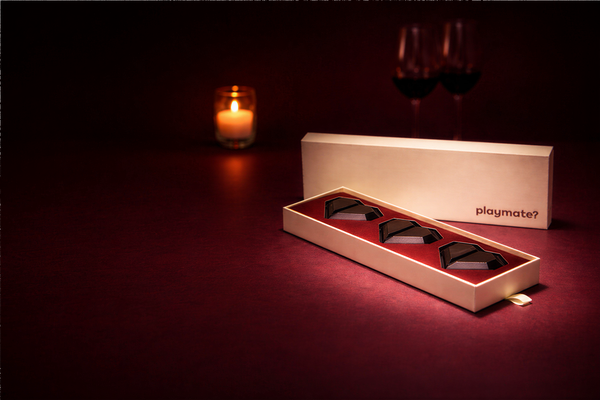
Asking the first question is the hardest part. It can feel like a big deal, even when it isn't. That's why we made Nude Stack'd, our date-night stacking game for couples. You pull a block, draw a card that matches its symbol and pick a level, or pass. Nobody has to be the one who "wants to talk".

- 54 wooden blocks and 54 prompt cards
- Six symbols on the blocks, matched to six card categories
- A game takes anywhere from five minutes to two hours
Nude Stack'd is back in stock on 1 November.
Until then, make your own version: write ten questions from this page on folded paper, pop them in a jar and take turns pulling one out after dinner. For more evenings built around long-term couples, see our romantic date night ideas for long-term couples.
How to print these questions
Every list on this page is numbered 1 to 155, so you can print it as it is. Four ways to use it:
- Question jar: print one section, cut the questions into strips and fold them into a jar.
- One a day: stick the deep questions list (11 to 30) on the fridge and ask one each evening.
- Monthly: keep the check-in list (116 to 130) somewhere you'll see it and use it once a month.
- Dinner cards: print the date night list (73 to 87) and bring three to the table.
Want a ready-made evening built around questions? Our Valentine's night in ideas include question games for two.
Frequently asked questions
What are good questions to ask your partner?
Good questions are open-ended and about the present. "What's something you've changed your mind about this year?" works better than "What's your favourite colour?" because it shows who your partner is now. Mix one deep question with a light one, and always ask a follow-up before you share your own answer.
What are deep questions to ask your partner?
Deep questions ask about values, fears, memories and hopes. Examples: "When do you feel most like yourself?", "What's a fear you rarely say out loud?" and "What does a good life look like to you at eighty?" Save them for a calm evening with no screens, and only ask one or two at a time.
Do the 36 questions work for couples?
The original 1997 study by Arthur Aron and colleagues tested pairs who had just met, not established couples. It found that working through escalating personal questions for about 45 minutes produced more closeness than small talk. Couples can still use them as a structured conversation, and the third set, about the two of you, is the one we would most encourage you to finish.
What questions should you ask to reconnect with your partner?
Ask about the relationship as it is now. "When did you last feel closest to me?", "What's one thing we used to do that you miss?" and "When do you feel like a team, and when do you feel like housemates?" are good starting points. Listen without defending yourself, then agree one small thing to try that week.
What should you ask your partner before moving in together?
Cover money, mess and alone time. Ask how you'll split bills, what "clean" means to each of you, how often guests can stay, how much time alone you each need and how you prefer to handle disagreements. These conversations are far easier before the boxes arrive than after.
How often should couples do a relationship check-in?
Once a month is a good place to start, and some couples prefer a shorter weekly version. Pick a regular time, keep it to about half an hour and start with what went well. The aim is to catch small niggles early and plan something to look forward to, not to review every problem at once.
Sources
- Aron, A., Melinat, E., Aron, E. N., Vallone, R. D. and Bator, R. J. (1997). The experimental generation of interpersonal closeness: a procedure and some preliminary findings. Personality and Social Psychology Bulletin, 23(4), 363 to 377. doi.org/10.1177/0146167297234003
- Greater Good Science Center, UC Berkeley. 36 Questions for Increasing Closeness.
- Laurenceau, J.-P., Barrett, L. F. and Pietromonaco, P. R. (1998). Intimacy as an interpersonal process: the importance of self-disclosure, partner disclosure, and perceived partner responsiveness in interpersonal exchanges. Journal of Personality and Social Psychology, 74(5), 1238 to 1251. doi.org/10.1037/0022-3514.74.5.1238